

Finally, everyone, well, most people, are paying attention to the state of our planet, and making lifestyle changes for the betterment of the environment. Whether that means something as simple as using reusable grocery bags, or going all out with a solar roof on your home. While some greener lifestyle choices are obvious, however others may be overlooked; for example, your shopping style. While shopping secondhand and thrifting are great ways to lessen your carbon footprint, here are a few shopping habits to get into if you want to be more environmental.

For many people, life is too busy to make repeated trips to the mall – everyone gets it. And online shopping is definitely an appreciated convenience of modern time. This is especially true in our era of free shipping and returns. The result is a growing group of repeat returners; those who would prefer to decide whether they like an item or an outfit from the comfort of their own homes because it’s so simple to send unwanted items back. They may even order the same items in varying sizes and colours.
While shipping may be free for the shopper, it’s not a very environmental shopping habit, thanks to the emissions from trucks carrying discarded items. Some companies, however, have started to crack down on rampant returns; a growing number of online retailers have hired third party companies to detect the repeat offenders and potentially ban them from using the site.
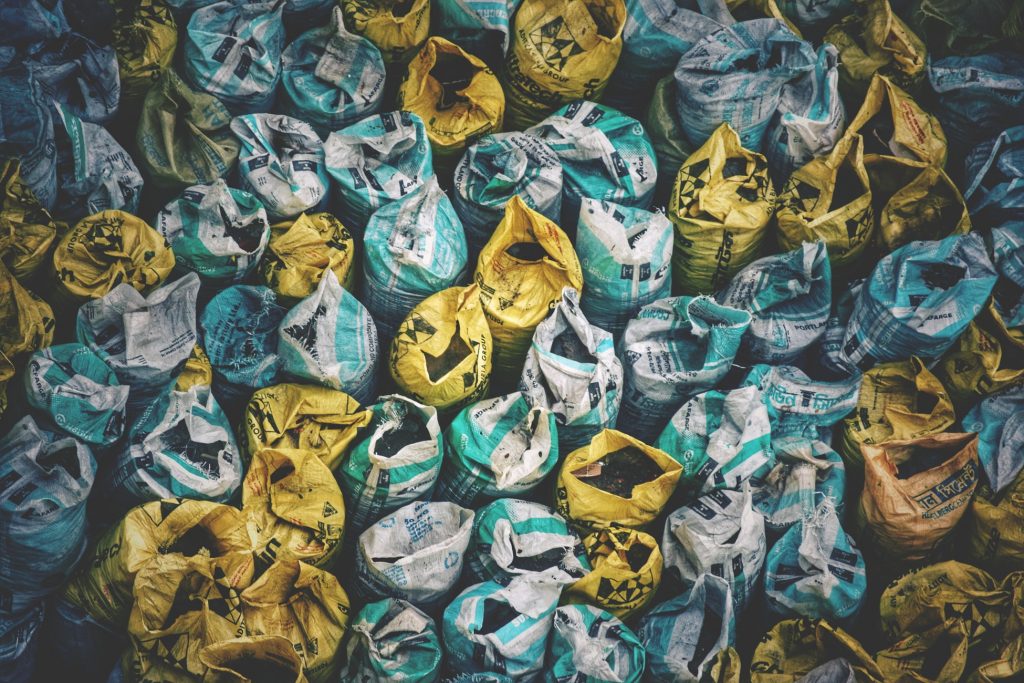
Especially in small living spaces, an annual or semi-annual closet cleanout is pretty much mandatory. Naturally, the byproduct of this is at least a couple bags full of perfectly intact clothing that no longer serves a purpose in your closet. The most environmental thing to do with these is either to take them to your local consignment shop or thrift store – especially if you’re looking to make a few extra dollars – or to drop them in a clothing donation box.
Sadly, the reality is that perfectly good garments end up in landfills, where they can take years to break down, thanks to former users lazily tossing them in the trash instead of offering them the chance to live on in other closets.
The further away your item comes from, the greater distance it has to travel to reach your doorstep, releasing all kinds of harmful emissions in the process; something to keep in mind during your next online shopping binge. Not only does shopping local help the diverse small businesses in your community grow, it is better for the environment – especially if your latest find is so “local” that you walked to and from the store.
When it comes to international online shopping, however, Canadians are the most active in the world. According to a recent UPS survey, 83 per cent of Canadian respondents had purchased an item from an international retailer, most prevalently, in the U.S. or China.

While many of the big fast fashion players have made major strides when it comes to environmental awareness at of late – something that’s reflected in everything from innovative new sustainable collections, to garment recycling programs – the reality is that fast fashion is still an issue. While it’s hard to resist the odd cheap and cheerful trend-of-the-moment, making a habit out of filling your closet with them may be sustainable for your wallet, but not the planet, especially when they are no longer in style a short while later.
While it seems nobody has enough cash these days to splurge on theoretically long-lasting designer items, there are more affordable alternatives to the usual fast fashion suspects, like shopping warehouse sales and sample sales, hitting consignment stores and the increasingly common option of renting clothing and accessories.

We all know the type: shopping is a passion and the more often they do it, the happier they are. I used to have a friend who would drive to the mall at least a few times a week. While I understand the appeal, if you’re driving to and from the mall so frequently – as opposed to doing a larger shop say, once every few months – you’re not doing the environment any favours. You’d feel better about your shopping habit if you walked or took public transit – even with a handful of shopping bags.
Articles You May Be Interested In:
Fast Fashion Retailer Promises To Make All Clothes Sustainable By 2025
Major Retailers Are Turning To Rentals & Used Clothing – Here’s Why
Inside The World Of Reselling Clothes On Shopping Apps
11 Times The Royals Helped Put Money In The Pockets Of Fashion Brands
Drinking And Online Shopping Has Become A Serious Problem
Clothing made out cow manure might sound gross, but before you turn up your nose and pooh-pooh the idea, big fashion retailers like H&M are here to change your mind. Despite most of us being surprised or even shook by the idea of wearing an animal byproduct such as poop, biocouture has actually been around for several years; pooh-fabric being one of the most promising innovations.
Dutch designer, Jalila Essaidi, is responsible for creating the process, having already completed an entire collection using cow manure, or as she calls it Mestic – and no it does not smell. Along with giving the fabric a much more appealing name, Essaidi also won awards, including $200,000 from Chivas Venture, and an H&M Foundation Global Change Award.
Essaidi tells the Guardian, “The process is chemical and mechanical… When you collect manure, it’s a combination of urine and cow poop, 80% water. We separate the dry and wet fraction. The wet fraction is fermented and we [extract] solvents to transform the cellulose, which is nothing other than the grass and corn the cows eat.”
When put that way, the idea of wearing clothing made out of manure doesn’t seem quite as daunting… So much so, that H&M has confirmed their intentions to use the inventive fabric source. As part of a sweeping movement to become 100% sustainable by 2040, and having already invested in a number of innovative eco-friendly practices, cow poop clothing is the next natural move.
Communications manager at the H&M Foundation, Malin Björne, states, “The world is already consuming the equivalent of approximately 1.6 of the planet’s worth of resources every year, and there is an urgent opportunity to shift to a model where valuable materials are recovered.” So essentially, whether we like it or not, people are going to have to get used to unconventional materials, especially those made from animal byproduct.
While one of the obvious reasons for this sort of progression is to create more biodegradable and energy-efficient fabrics, cow-poop clothing also pairs with the issue of what to do with excess cow manure. A large percentage of pollution in waterways can be pegged to run off so it turns out cow manure helps resolve more than one issue.
Although, the biggest win here, isn’t the innovation itself, but rather Essaidi’s effort to bring it to the mass market. Traditionally, biocouture has had issues with scalability in the past, but Essaidi is working on changing that. As of now, the Dutch designer is partnering with 15 farmers in Eindenhoven to create an industrial scale manure refinery that will hopefully be able to serve retailers on a much larger scale.
Along with H&M, Essaidi has also claimed that other retailers have shown an interest in signing on, but won’t explicitly state that they are using poop-fabric on the labels. So, it seems that whether you like it or not, you might be wearing manure in the near future without even knowing it. But, perhaps it’s better that way: what you don’t know can’t hurt you.
Sources: The Guardian, Cosmopolitan
Canadian fashion brands have taken great strides in minimizing their ecological footprint over the years. Some designers have changed the way consumers think about eco-fashion by using sustainable fabrics and recycled textiles that don’t decompose, such as plastics, and turning them into trendy, wearable garments.
With local brands seeking ways to reduce, reuse and recycle, larger, high-end designers and retailers are forced to do the same if they want to remain relevant in today’s buyer’s market.
Let’s face it though, eco-fashion usually gets a bad wrap. When you think of ethical, sustainable fashion, you probably picture something muted, shapeless and wooly – like a potato sack.
But with the fashion industry being the second largest polluter in the world (after the oil industry), the perception that eco-fashion is dismal needs to change.
According to a study from the Business Development Bank of Canada, more and more Canadian consumers are looking for locally made products. The study also identified five trends that are increasingly shaping consumer behaviour:
All these trends point to the ethical clothing movement that seems to be etching its way upon the fashion world. From clothing to accessories, there is a growing number of local designers who are working towards shaping a more sustainable fashion industry in Canada. Here are a few Toronto-based designers who are doing just that.

Image: Instagram/@Miikinc
Miik is a brand that is actually made right in Toronto. Their products are made of bamboo which is milled in the city in what is called a closed loop process which is more sustainable. Milling, designing and sewing all their garments locally supports local businesses and minimizes carbon emissions. The Miik brand is currently carried in 75 stores across Canada.

Image: Instagram/@FigClothing
Fig is a sportswear brand for the active, urban and elegant woman who loves to travel. Many of their products are made with organic cotton which is always better because there are no pesticides used in its production. The brand’s garments are inspired by adventure and practicality all while keeping in mind the need for functionality and versatility.
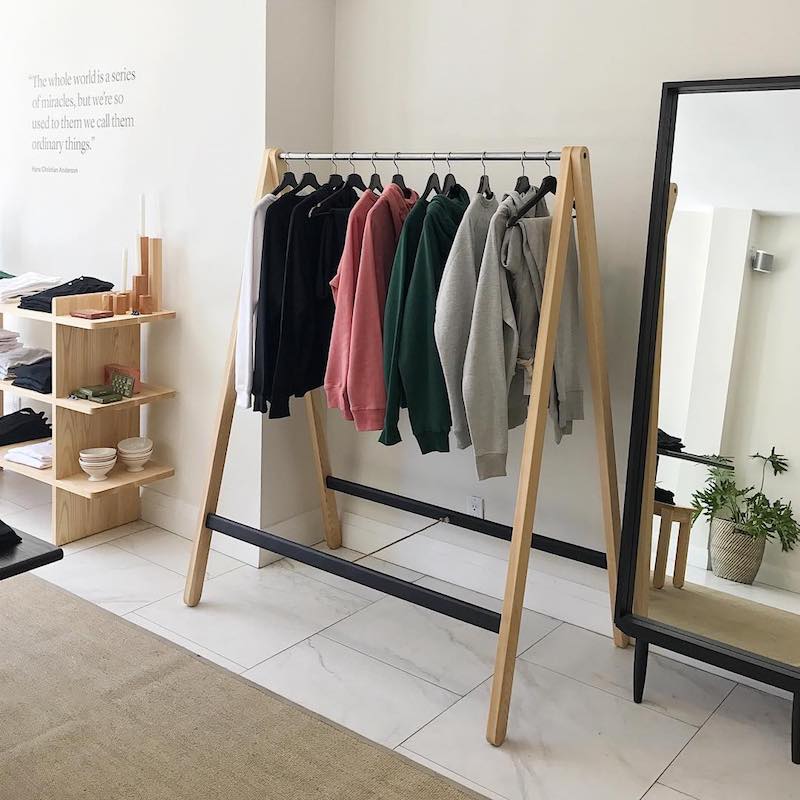
Image: Instagram/@wearkotn
KOTN came about from a desire for good quality and simple essentials that don’t cost a fortune. All of KOTN’s clothing focuses on authentic Egyptian cotton sourced from Nile Delta. Egyptian cotton is finer, softer and more breathable than any other cotton. KOTN works directly with farming families in Egypt and make their own fabrics from raw cotton bought at guaranteed prices. Consider it farm-to-table but for clothing.

Image: Instagram/@PeggySueCollection
No other fashion designer does ethical sourcing like Peggy Sue Deaven-Smiltnieks. The woman behind Peggy Sue Collection sources every single fibre she uses from Ontario farmers. She also sources all the weaving, tanning and construction of her garments locally for beautiful minimalistic clothing with tons of texture.

Image: Instagram/@prelovedtoronto
Up-cycling is one of the most eco-friendly ways to manufacture clothing and Toronto clothing company Preloved was one of the first brands to use the technique. Preloved’s high-quality, well-constructed, designer garments are made from a variety of recycled vintage pieces, deadstock and overrun fabrics. Such a method allows Preloved to keep their production local and their costs low, giving the consumer a great price.
Featured Image: @jacquelineyschiu in @wearkotn
Posts you might be Interested in:
Lush Cosmetics is Hosting a Huge Job Fair + Hiring 1000 People
This is Why Society has Become so Obsessed with Buying Luxury
Forever 21 Accused of Stealing Designs from Local Canadian Designers
Tokyo Smoke Redefines the Stoner with New Toronto Flagship Store
10 of the Best Designed Stores in Toronto


